2026.11, Kamikawa, Hokkaido
A Month in Rural Japan as a Digital Nomad: The Italian Engineer Who Made Our Logo With Us
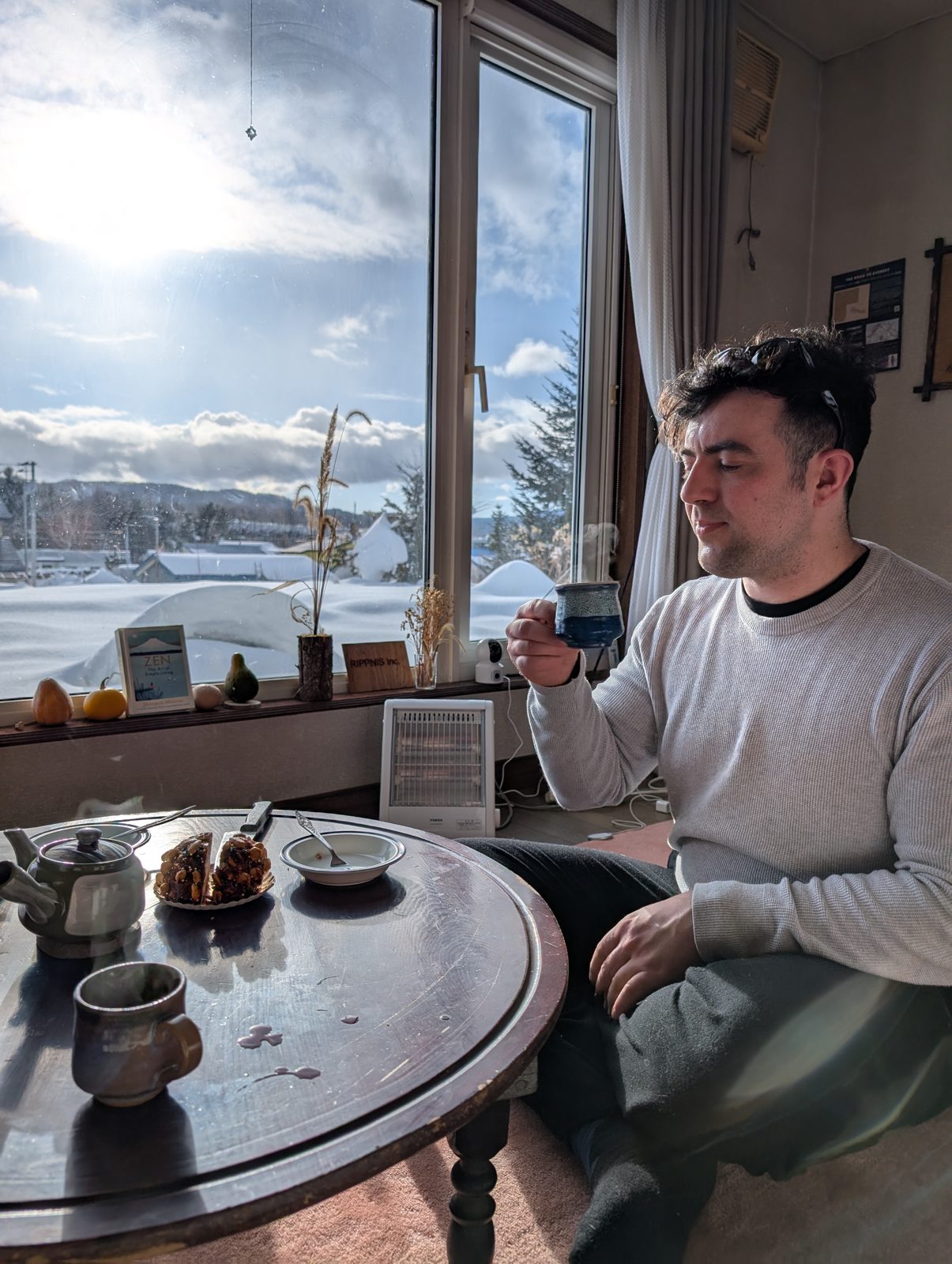
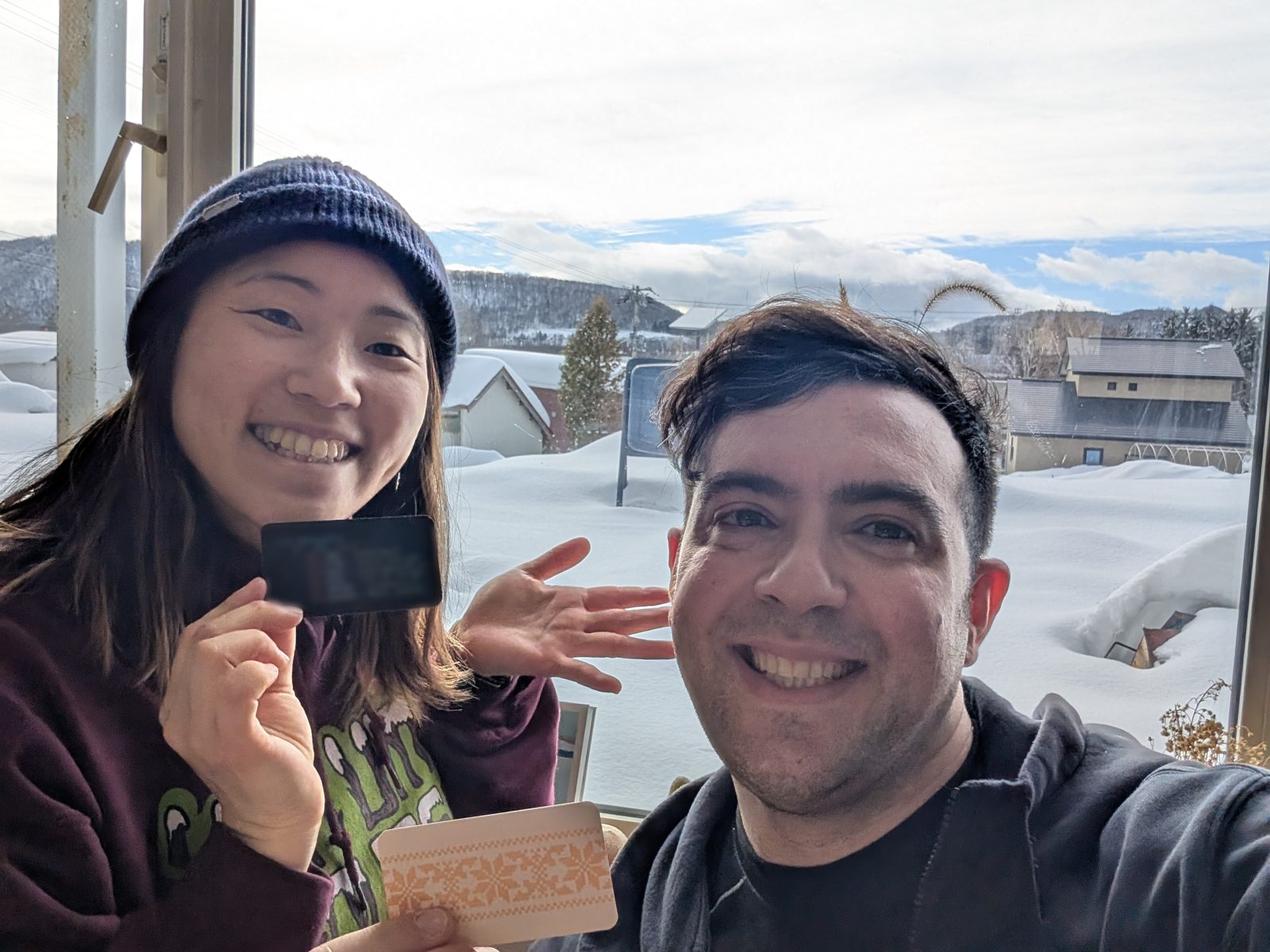
Our first guest at MOTO Coliving was Stefano Nocco from Sardinia, a data analyst and AI engineer who also works in marketing and on regional revitalization in his home island. He came during a career break, on his first trip to Japan, and instead of starting in Tokyo, he spent his first month in Kamikawa, a snowy town of about 3,000 people in Hokkaido. He worked remotely, researched the town, made friends, and before he left, he and Ayaka made the MOTO logo together.
- Guest
- Stefano Nocco from Sardinia, Italy: data analyst, AI engineer, marketing and regional revitalization
- Stay
- January 31 – February 28, 2025, at MOTO Coliving in Kamikawa
- Work
- A career break: remote work and his own field research on Kamikawa
- Made together
- The MOTO Coliving logo, with Ayaka
A month of work in the snow
Stefano arrived on January 31, 2025, at the coldest point of the Hokkaido winter. His days had a simple rhythm: work at the wooden desk by the window, walk through the snow into town, cook in the shared kitchen, and talk late into the evening. Japan is eight hours ahead of Italy in winter, so his mornings were quiet and his evenings overlapped with colleagues at home.
He was not a tourist passing through. He joined our international exchange events, made Japanese friends, and became a familiar face in a town where everyone notices a new one.
Researching a town that refuses to give up
Stefano comes from central Sardinia, another place shaped by depopulation. In Kamikawa he saw the same story from the other side of the world: a town that had about 15,289 people in 1960 and about 3,053 when he arrived. He spent the month on field research, reading municipal documents, collecting data and listening to residents, and published it in Italian as a long report on the town's history, policies and community.
Read his research: Kamikawa, Hokkaidō (in Italian) →
The logo, born from a piece of glass
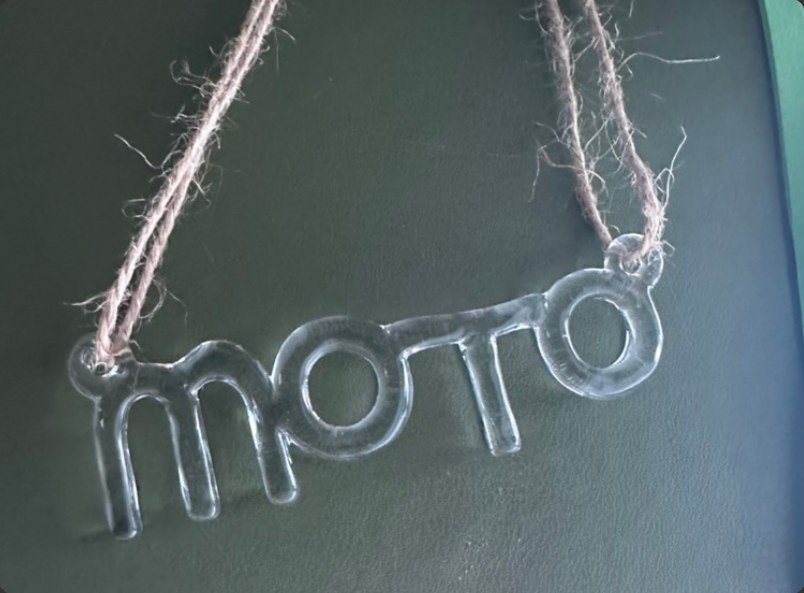
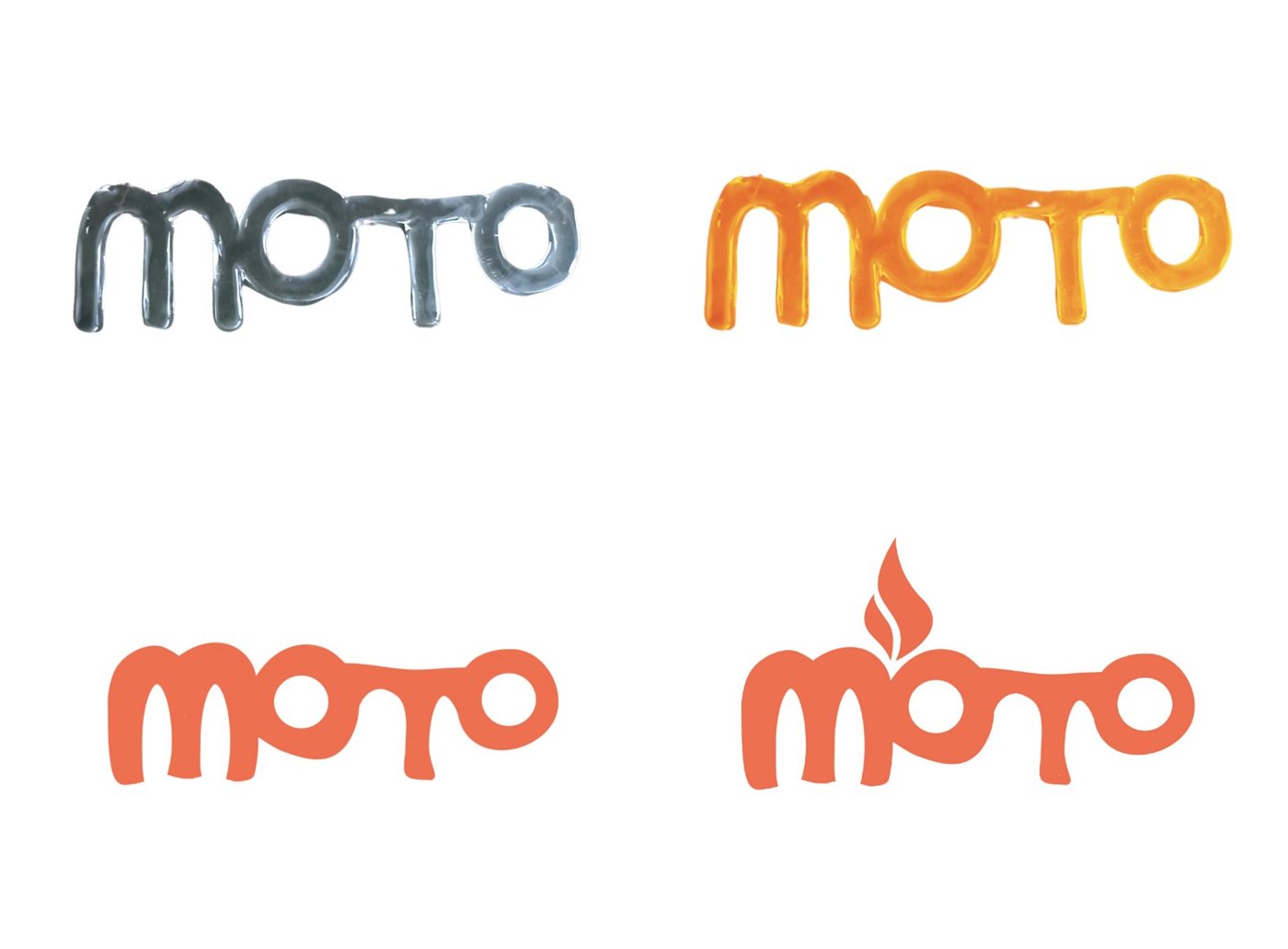
In the house hangs a small glass sign that spells “moto”. Stefano and Ayaka started there. Stefano traced the handmade letters, kept their soft, uneven lines and turned them warm orange. Together they added a flame above the “o”, because moto means fire in Swahili, the word Ayaka brought home from her years in Africa. Fire is energy, warmth and change, the things MOTO is built around.
MOTO Coliving is not just a place; it's a community on the move. This new logo represents that energy.
He presented the logo in three languages, Italian, English and Japanese, with the colours and typefaces for every use. Today it is on every page of this website.
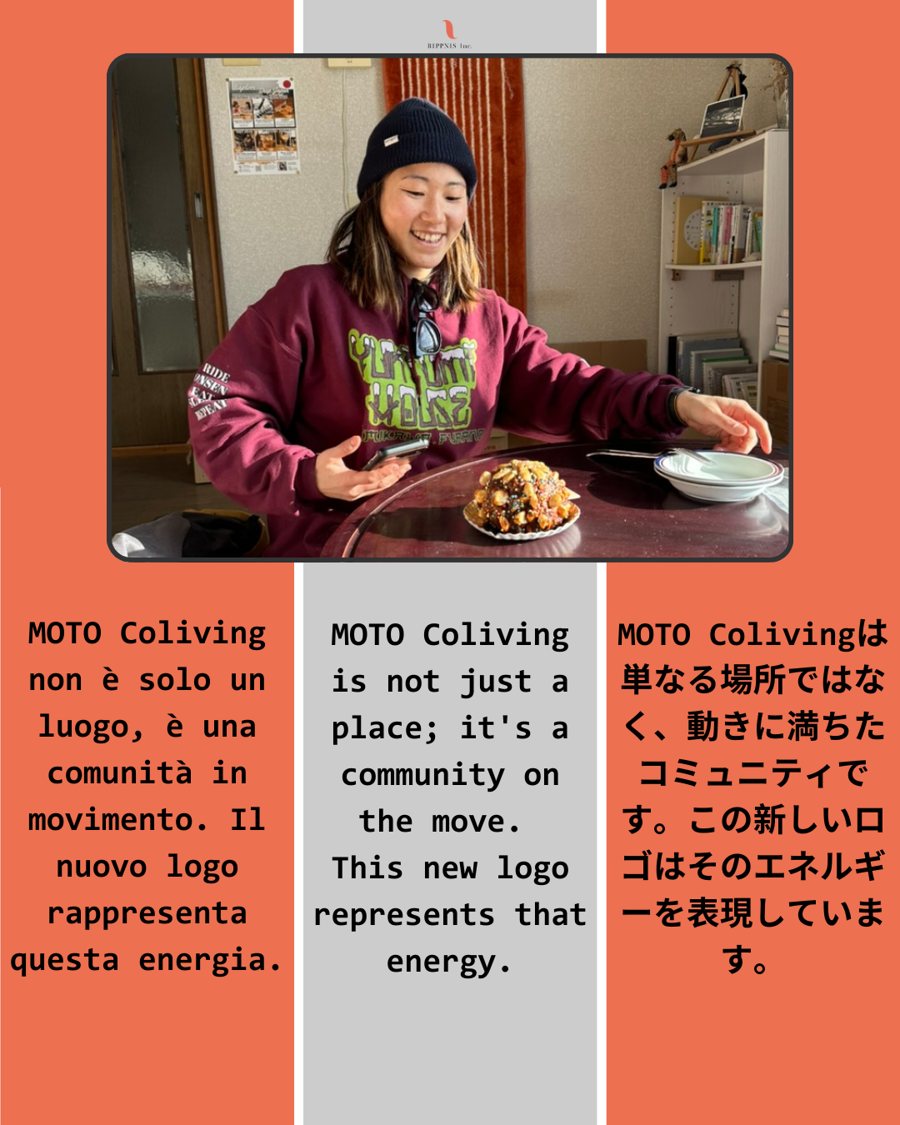
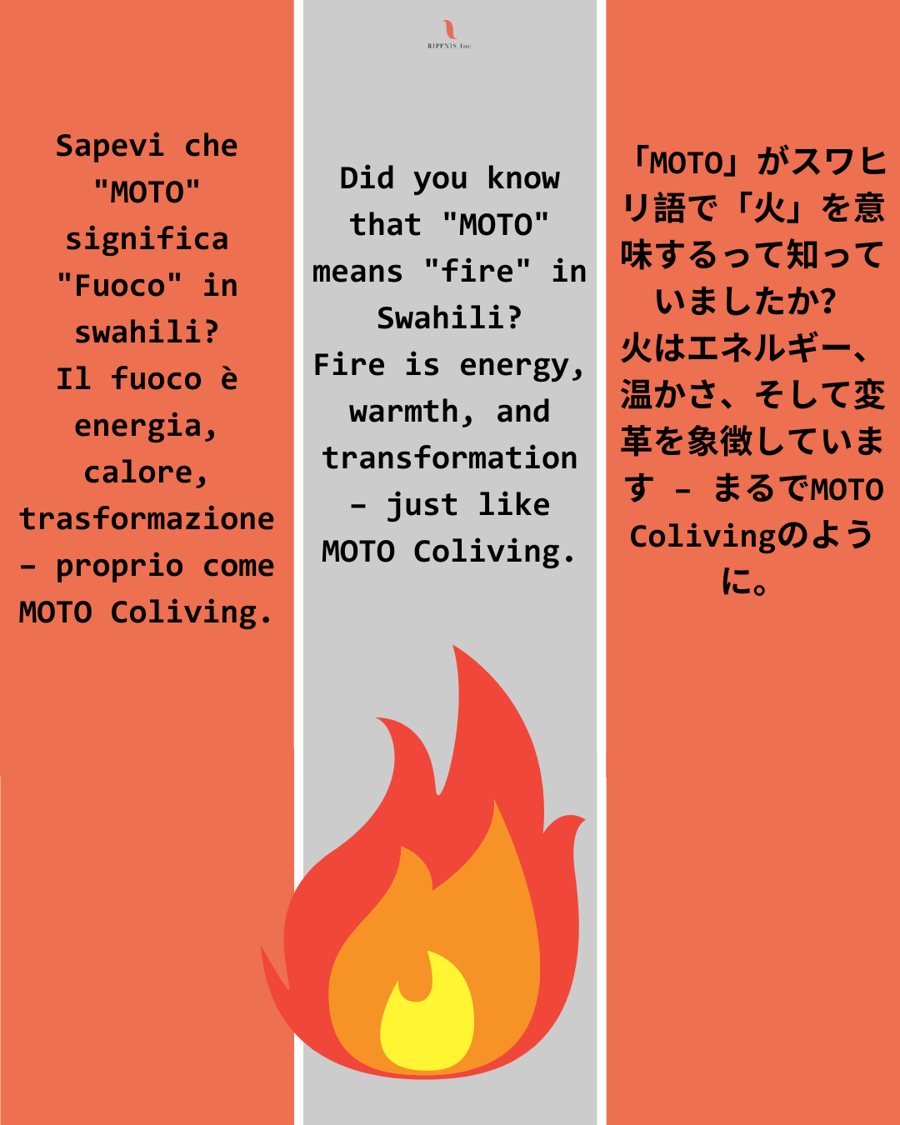
Two slides from Stefano's logo presentation, written in Italian, English and Japanese.
See all 20 slides of his logo presentation (PDF) →
I'm very happy to have been able to create this logo. Everything perfectly embodies Moto's mission. Sharing one's experiences is essential!
After Kamikawa
On March 1, Stefano left the snow and kept travelling: Sapporo, Fukuoka, Hiroshima, Osaka, Kyoto, and finally Tokyo, almost three months in Japan in all. He started in the smallest place on his route, and it is the one he researched most deeply.
His photo journal from Kamikawa to Tokyo (in Italian) →
Japan and Sardinia, connected by ikigai
Stefano's home, Sardinia, is one of the places Dan Buettner called Blue Zones in his book The Blue Zones: regions where many people live to a great age. He asked centenarians there how they live and found habits they share, among them a clear sense of purpose, a slower pace of life, and close ties with family and others. In Japanese, that sense of a life worth living has a name: ikigai. It is what MOTO is built around, in a small town in Hokkaido on the other side of the world. In July 2026, Stefano sent us a documentary about the elders of Sardinia and their long, simple lives, set against modern life. It has a Japanese dub, so our friends in Kamikawa could watch it too.
“L'isola dei centenari” by Progetto Happiness, on YouTube (Italian, with a Japanese dub available).
At MOTO, the people who stay with us are not guests. They are people we live alongside, and we keep building lives with ikigai together, long after the stay ends.
Working remotely from Kamikawa
MOTO Coliving has two guest rooms, a shared wooden desk with an external monitor, Wi-Fi of about 70 Mbps down, and a shared kitchen. Stays start from 3 nights, and the Coliving Plan (14+ nights) is made for a month like Stefano's. In winter, Kurodake's powder is 25 minutes away by bus, and Sounkyo Onsen is there at the end of the day.
FAQ
Can you work remotely from rural Japan?
Yes. At MOTO Coliving in Kamikawa, Hokkaido, guests work from a shared wooden desk with an external monitor, on Wi-Fi of about 70 Mbps down. Stefano worked here for a full month in February, with Japan's time zone (UTC+9) eight hours ahead of Italy in winter.
Why stay in a small town instead of Tokyo?
In a town of about 3,000 people, you become part of daily life: neighbours, local events, the same café every morning. Stefano chose Kamikawa for his first month in Japan and spent the rest of his trip travelling to Tokyo afterwards.
How long do digital nomads stay at MOTO?
Stays start from 3 nights, and the Coliving Plan (14+ nights) has the lowest nightly rate. Many remote workers stay a month or two.
Who designed the MOTO Coliving logo?
It is a joint project of Stefano Nocco, our first guest, and Ayaka Ono, MOTO's founder, made during his stay in February 2025. It grew from a glass sign spelling "moto" that hangs in the house, and the flame stands for the word's meaning in Swahili: fire.